

Creative Connection Begins Again Making Space for Belonging and Creativity
A new term always begins before the first child walks through the door.
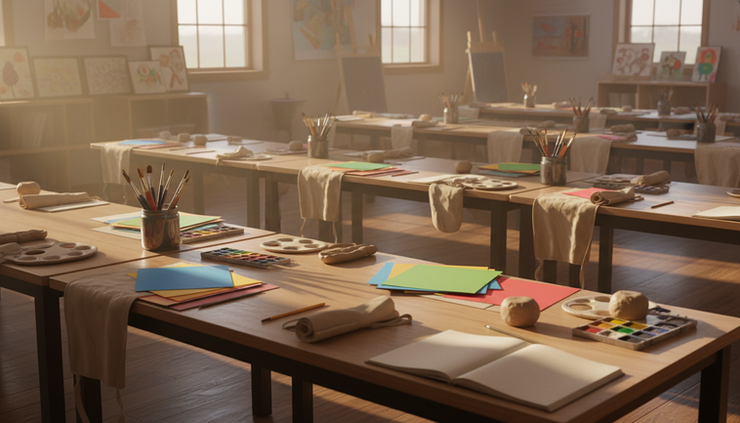
It begins in the quiet room, with clean paper waiting on the tables, materials laid out, chairs ready to be moved, and the feeling that something is about to happen.
Soon, the space will fill with voices, choices, movement, colour, curiosity and moments of surprise.
Tomorrow, Creative Connection begins again.
There will be new children joining us for the first time, bringing their own personalities, stories, ideas and ways of seeing the world. There will also be familiar faces continuing their creative journey with us, ready to build on what they have already explored.
Every child brings something different into the room. Some arrive full of ideas. Some need time to settle. Some want to talk while they create. Others prefer to work quietly with their hands. That mix is what makes Creative Connection feel alive.
It is never just about what gets made. It is about the experience of making, the confidence that grows along the way, and the sense of belonging that can come from being accepted as you are.
A full house shows how much these spaces are needed
This term is now fully booked, with a waiting list of families hoping to join.
That means a great deal to us. A full class is lovely, of course, but this feels bigger than numbers. It is a clear sign that children and teenagers need places where they can step away from pressure, slow down and express themselves without having to get everything right.
Young people carry a lot. School expectations, social pressure, busy routines, screens, noise and change can all build up. Many children do not always have the words to explain what they feel. Some are still working those words out. Some know exactly what they feel, but do not want to speak about it directly.
Creative spaces offer another route.
A brush, a lump of clay, a torn piece of paper or a line drawn across a page can become a starting point. The act of making gives children time to notice what is going on inside them. It also gives them a way to share something without needing to explain every part of it.
For some young people, finding the right space at the right moment can make a meaningful difference. A room that feels safe, welcoming and unhurried can help them breathe out. It can remind them that they do not have to perform, compete or fit into one narrow idea of success.
That is why the demand for Creative Connection matters. It shows that families are looking for more than an activity to fill time. They are looking for connection, care, creativity and community.
Creative art workshops for teenagers can be especially valuable when they allow space for independence and emotional expression, rather than only focusing on finished artwork. Teenagers often need room to test ideas, question things, make choices and be trusted with their own creative voice.
Creative Connection holds that need carefully. It is a place to make art, but it is also a place to feel seen.
Belonging grows through small moments
Belonging is not something that can be forced. It does not appear because someone says, “Everyone belongs here.” It grows through small, repeated moments.
A child is offered a choice of materials.
Someone notices the colour they chose.
A mistake is treated as part of the process.
A quiet child is given time.
A child who feels unsure is not rushed.
A teenager’s idea is taken seriously.
These moments matter. They tell young people, in gentle ways, that there is room for them.
At Creative Connection, we want each child to feel that they can arrive as themselves. They do not need to be “good at art” to take part. They do not need to know what they want to make before they begin. They do not need to copy anyone else.
There is permission to try.
There is permission to change direction.
There is permission to make something unexpected.
That kind of freedom can feel rare. Many parts of a young person’s life are measured, marked or judged. Art can be different. It can be a place where the question is not, “Is this right?” but, “What happens if I try this?”
That shift opens up possibility.
Creating from the inside out
This term, we will explore different materials, techniques and forms of art.
We will experiment.
We will get messy.
We will make mistakes.
We will discover new ways of creating.
Some sessions may begin with paint and colour. Others may invite children to build, shape, layer, print, draw, collage or combine materials in unusual ways. Each material brings a different kind of invitation.
Paint can feel bold and freeing.
Clay can feel grounding.
Collage can help bring separate thoughts together.
Drawing can help a child notice details.
Mixed media can make room for surprise.
The aim is not to produce identical pieces. The aim is to help children explore what feels meaningful to them.
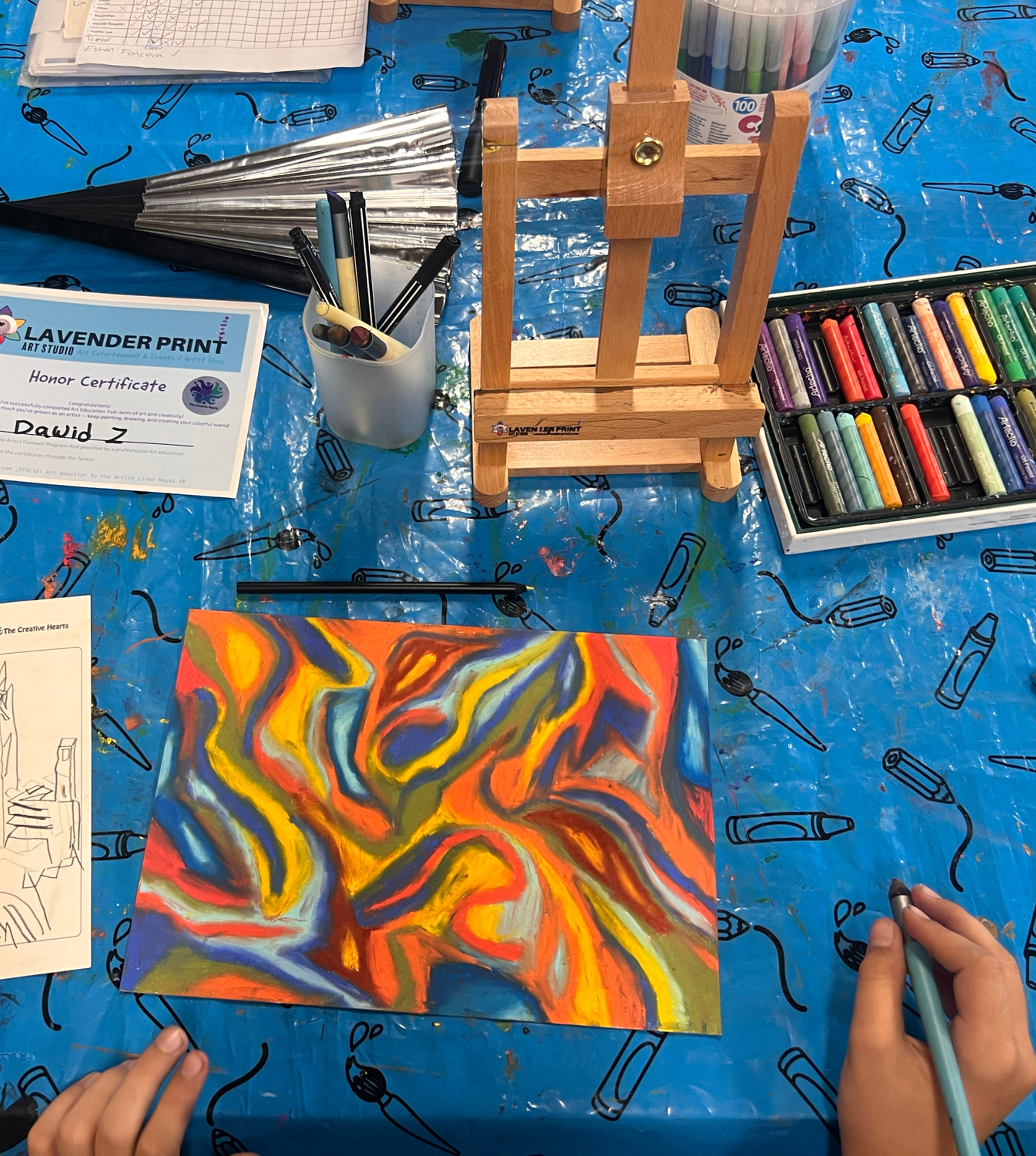
That might look like a bright, joyful painting full of movement. It might look like a small sculpture that has been carefully shaped in silence. It might look like an abstract piece that only the child fully understands. It might look unfinished to someone else, but complete to the person who made it.
There is real value in allowing that.
Children often know more than they can say. Through creative work, they can give shape to thoughts, feelings and experiences that may be hard to express in conversation. Sometimes a colour says something. Sometimes a shape says something. Sometimes the pressure of a pencil or the way paper is torn carries meaning.
Making something with your hands can also bring a child back into the present moment. They can feel the texture of clay, watch water change paint, notice how materials respond and become absorbed in the process. That focus can be calming, playful or energising, depending on what the child needs.
Art gives young people a way to create from the inside out. It starts with their own imagination, emotions and experiences, then turns into something they can see and hold.
That is powerful.
Mistakes are part of the work
One of the most important lessons in any creative space is that mistakes are allowed.
In fact, mistakes often lead to the most interesting discoveries. A colour mixes differently from how a child expected. A piece of paper tears in the wrong place. A clay shape collapses. A drawing does not match the idea in their head.
In many settings, that can feel frustrating. In a creative workshop, it can become the beginning of something new.
We might ask:
What could this become?
What happens if we add another layer?
Can we turn it round and see it differently?
What does the material want to do?
Is there another way to approach it?
This kind of thinking supports more than art. It helps children practise flexibility. It helps them stay with discomfort. It helps them learn that a difficult moment does not mean the whole thing has failed.
That can be especially useful for children who put pressure on themselves. Some young people are quick to say, “I can’t do this,” or “I’ve ruined it.” The creative process gives us a chance to slow that moment down.
A mistake does not need to be hidden. It can be worked with.
A change of plan does not mean giving up. It can mean becoming curious.
Over time, that can build confidence. Not the loud kind of confidence that needs everyone to notice, but a quieter kind. The kind that says, “I can try again.”
New faces and familiar journeys
A new term brings a special kind of energy because the group is both beginning and continuing at the same time.
For children joining us for the first time, everything may feel new: the room, the people, the rhythm of the group, the materials, the way sessions unfold. Some may step in with excitement. Others may need reassurance and time to observe before they feel ready to take part fully.
Both responses are welcome.
For children returning, there is comfort in familiarity. They may remember where things are kept, what they enjoyed last term, or which materials they want to try again. They may also arrive ready for something different, with new questions or new confidence.
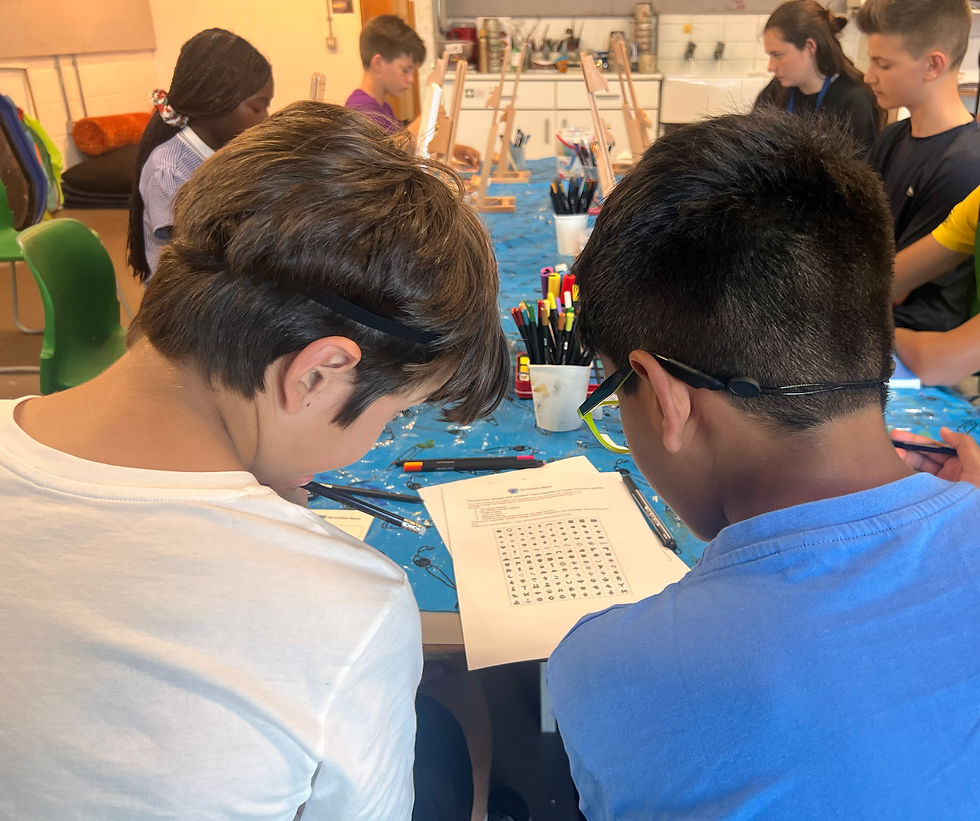
The beauty of a mixed group is that children often learn from each other in quiet, natural ways. One child’s courage can encourage another child to try. One child’s unusual idea can open a new route for the whole table. A teenager’s focus can set a calm tone. A younger child’s playfulness can remind everyone that art does not need to be too serious.
Creative Connection grows through these relationships.
The group is not built through grand gestures. It is built through shared materials, small conversations, respectful silence, laughter, problem-solving and the simple experience of making alongside others.
When children feel part of a group, they are more likely to take creative risks. They are more likely to ask for help, offer encouragement and trust their own ideas. Belonging gives creativity somewhere to land.
Why the process matters more than the product
Finished artwork can be beautiful. It can be exciting for children to take something home and show it to someone they love. Those moments matter.
Still, the process carries the deepest value.
During a session, a child makes dozens of small decisions. They choose colours. They test materials. They solve problems. They respond to accidents. They notice what they like and what they do not like. They learn when to keep going and when to stop.
Those decisions help children develop a sense of ownership. The work becomes theirs because they shaped it.
A process-led approach also makes room for different needs and different ways of working. One child may create quickly and with energy. Another may spend most of the session on one tiny detail. One may talk through every choice. Another may say very little but remain deeply engaged.
All of these ways of creating are valid.
When adults focus too heavily on the finished product, children can start to worry about approval. They may ask, “Is this good?” before asking, “Do I like this?” They may copy rather than explore. They may avoid risks because they fear making something that looks wrong.
When the process is valued, children begin to trust themselves more.
They start to understand that art is not only about neatness or skill. It is also about curiosity, expression, play, courage and discovery.
That is the heart of Creative Connection.
A creative space with care at its centre
Creative Connection in North Finchley has become a place where creativity and care sit together.
The care is in the way the room is prepared. It is in how materials are offered. It is in the attention given to each child’s pace. It is in the understanding that some children need encouragement, while others need space. It is in knowing that creative work can stir feelings, and that those feelings deserve respect.
A good creative space does not demand immediate openness. It creates the conditions where openness can happen naturally.
That means we pay attention to the atmosphere. We think about how children enter the room, how they move between activities, how they ask for help, and how they leave. We notice when someone is becoming frustrated. We notice when someone is proud. We notice when someone is quietly absorbed and should not be interrupted too quickly.
This kind of care helps children feel safe enough to explore.
It also helps them build trust, both in the adults around them and in themselves. They learn that their ideas can be taken seriously. They learn that there is no single correct way to make something. They learn that their presence adds something valuable to the group.
That message can stay with a child long after the session ends.
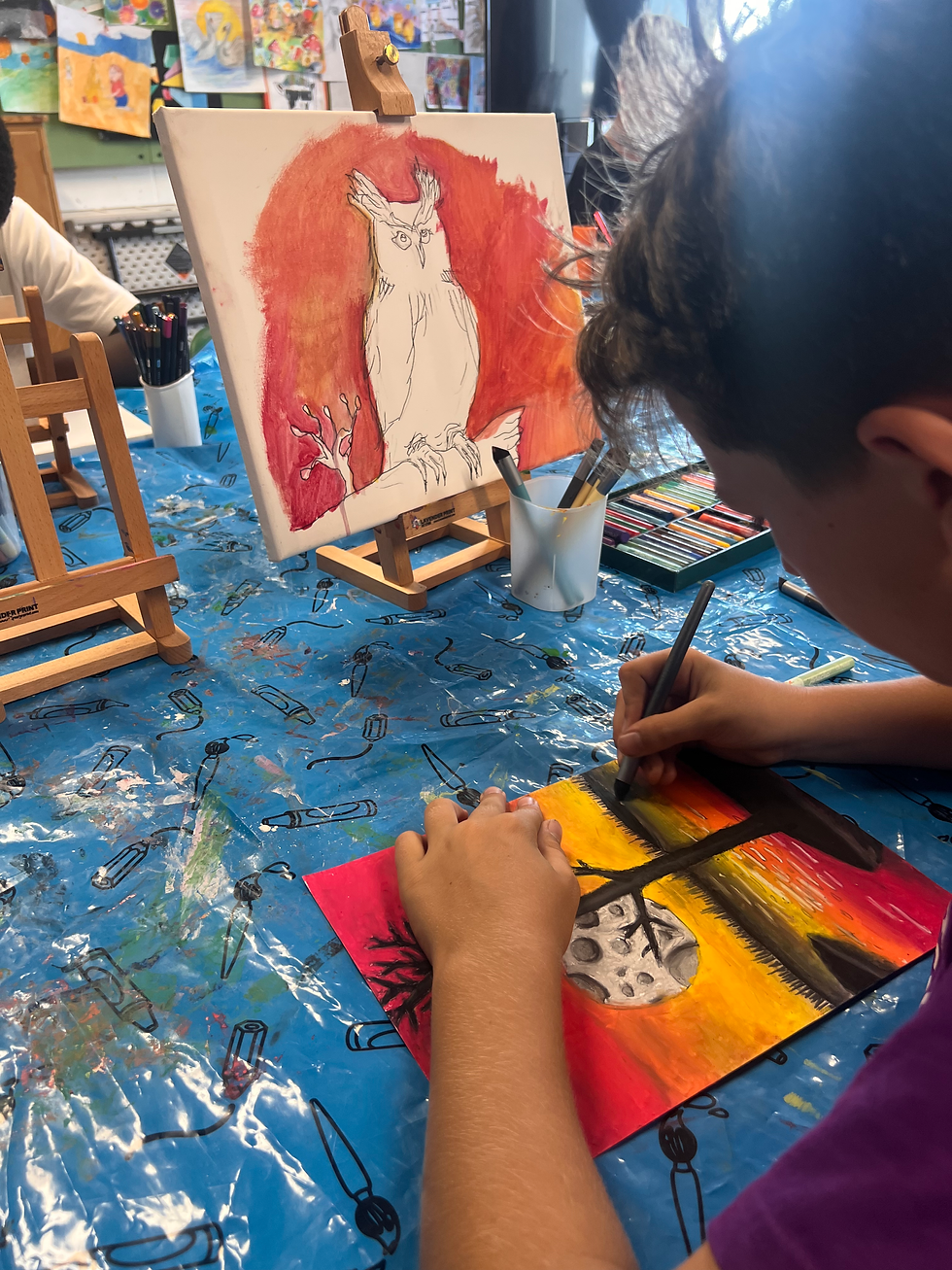
Looking ahead to the new term
As this new term begins, there is excitement in the room before the first mark is made.
We are looking forward to seeing what the children create, but even more than that, we are looking forward to seeing how they create. The choices they make. The friendships that grow. The moments when they surprise themselves. The times they feel brave enough to try something new.
We are grateful to every family who has chosen to be part of this term, and we are thinking of those on the waiting list too. The growing interest reminds us that this work matters.
Children and teenagers need places where they can explore without pressure. They need time where their imagination is welcomed. They need adults who listen, not only to words, but to colour, shape, movement and mood. They need spaces where they can belong before they have to achieve.
That is what we hope Creative Connection offers.
A room waiting to be filled with ideas.
A group ready to welcome new stories.
Materials ready to become something unexpected.
A term ready to begin.
And most of all, a space where young people can create, explore and feel that they belong.


Comments