

The Creative Connection Building Family Through Art in Barnet and North Finchley
Something special is happening in a creative room at Artsdepot in North Finchley.
At first, the children and young people arrived as individuals. Some came quietly. Some came full of ideas. Some knew exactly what they wanted to make. Others were still working out where they fitted in. They were children sharing a space, sitting at the same tables, using the same materials, taking part in the same free creative programme.
After several weeks together, that space feels different.
The Creative Connection, supported by The National Lottery Community Fund, is becoming much more than a regular art session. It is becoming a place where young people recognise one another, ask questions, remember details, offer advice and celebrate progress. A place where they can try, make mistakes, laugh, concentrate, talk and simply be themselves.
The group is beginning to feel like a family.

A creative space where connection can grow
The Creative Connection was created as a free, welcoming and inclusive programme for children and young people in and around Barnet and North Finchley. Its purpose is simple, but powerful: to give young people access to creative opportunities without cost becoming a barrier.
That matters.
For many children, a creative space can be the first place where they feel heard in a different way. They do not have to give the right answer. They do not have to compete. They do not have to be the loudest person in the room. They can communicate through colour, shape, texture, movement, conversation and choice.
In the early weeks, the group was still finding its rhythm. Children sat near one another, but many were focused on their own work. They listened to guidance, explored materials and began to understand what the sessions could offer. There was energy in the room, but it was still forming.
Now, the atmosphere has shifted.
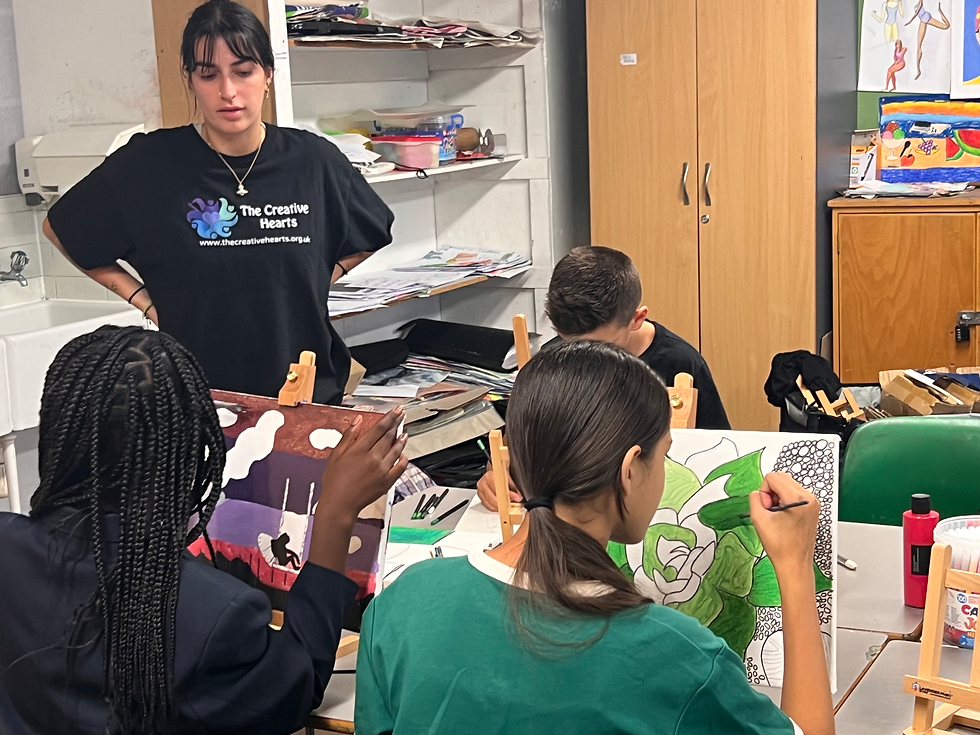
The children talk to one another with growing ease. They share interests, compare ideas, ask what someone else is making and notice when another person needs encouragement. They offer little pieces of advice. They show each other how they achieved a particular effect. They listen when someone explains an idea that matters to them.
These moments may seem small from the outside. In the room, they feel huge.
A child asking another child, “How did you do that?” opens the door to confidence. A young person saying, “That looks good,” can change the way someone sees their own work. A group laughing together while trying something new can turn nervousness into belonging.
The creative process is giving the children a reason to connect. The artwork brings them to the table, but the relationships keep growing around it.
This is much bigger than an art class
Art is at the heart of The Creative Connection, but the impact reaches far beyond the finished pieces.
Each session gives young people a chance to practise communication in a natural way. They explain their ideas. They ask for help. They listen to feedback. They learn that another person may see the same object, colour or theme completely differently, and that this difference can be interesting rather than intimidating.
That is a powerful lesson.
In a creative setting, children can discover common ground with people they may not otherwise have met. One conversation about a drawing can become a conversation about music, school, family, favourite colours, places they know or things they care about. Slowly, the group moves from polite interaction to real connection.
The sessions also help build confidence. Confidence does not always arrive loudly. Sometimes it looks like a child choosing a bolder colour than last week. Sometimes it looks like someone showing their work to the group for the first time. Sometimes it looks like a young person staying with a tricky idea instead of giving up.
The Creative Connection gives those moments room to happen.
It also helps children understand that creativity is not only about talent. It is about curiosity, patience and courage. It is about trying again. It is about seeing what happens when an idea changes halfway through. It is about learning from the person next to you and realising that your own voice has value too.
In that sense, the programme is already strengthening community connection. It brings young people together in a shared place, gives them a shared purpose and helps them build trust through making.
The artwork matters, but the deeper achievement is the way the children are beginning to see, hear and support one another.

The still-life project became a shared journey
One of the most exciting recent projects has been the group’s still-life work.
Still life can sound traditional, even quiet. In this setting, it became lively, thoughtful and full of conversation. The children began by looking closely at objects, shapes, lines and shadows. They explored what they wanted to show and how they wanted to show it. Each young person brought their own eye to the arrangement.
Some noticed small details. Some focused on bold outlines. Some were drawn to colour. Others became interested in how objects overlapped or how the background could change the whole feeling of the piece.
As the project developed, the table became a place of exchange.
Children talked through their choices. They watched one another work. They made suggestions, sometimes practical and sometimes imaginative. They compared techniques and noticed different styles emerging across the group. One idea sparked another. A question led to a new experiment. A moment of uncertainty became a chance for someone else to step in with support.
The room held both focus and friendship.
That is what made the final artwork so meaningful. It was not just the result of following instructions. It grew from individual ideas, shared conversations and a group willing to keep going together. By the time the piece was complete, the children could look at it and recognise something of themselves in it.
They had made something beautiful. They had also made it through a process that required attention, patience and trust.
There is pride in finishing an artwork. There is a different kind of pride in knowing that you contributed to a shared experience. The still-life project gave the children both.
The real success is visible in the group
The final still-life artwork is important. It deserves to be celebrated. It shows skill, imagination and effort.
Yet the real success of The Creative Connection can be seen in what is happening between the children.
It can be seen when one young person encourages another to keep going. It can be seen when someone who was quiet at the start now shares an opinion. It can be seen when children begin to remember each other’s interests and ask follow-up questions. It can be seen when the group welcomes difference and finds ways to connect anyway.
These are the signs of belonging.
Belonging is not created by simply placing people in the same room. It grows through repeated moments of safety, trust and shared experience. It grows when children feel that their ideas will be respected. It grows when they know they can try something new without being laughed at. It grows when they realise they are part of something larger than themselves.
The Creative Connection is helping to create those conditions.
For children and young people, that can be deeply meaningful. A free creative programme can offer more than access to materials. It can offer a steady place to return to. It can offer familiar faces. It can offer a sense of being included in a community space that is theirs too.
North Finchley and Barnet are full of young people with ideas, stories and talent. Programmes like this help make sure those ideas have somewhere to go. They also help young people meet across different backgrounds, experiences and interests, building bridges through shared creativity.
This is community work through art. It is gentle, practical and human. It happens through paintbrushes, pencils, tables, conversations and time.
Why free creative programmes matter in Barnet and North Finchley
Access is a central part of the story.
When a programme is free, it removes a barrier that might otherwise stop a child from taking part. Families do not have to weigh up whether creativity is affordable. Young people can enter the room knowing they are welcome, not because they can pay, but because their presence matters.
Support from The National Lottery Community Fund helps make that possible. It allows The Creative Connection to focus on inclusion, consistency and care. It helps create a space where children and young people can build skills while also building relationships.
In Barnet and North Finchley, this kind of work has a ripple effect.
A child who feels more confident in a creative session may carry that confidence elsewhere. A young person who learns to listen to others in the group may bring that skill into school, home or friendships. A child who feels they belong in a local arts venue may begin to see their wider community differently.
Creative programmes do not solve every challenge facing young people. They do offer something real and needed: a positive place to gather, express, connect and grow.
That is why The Creative Connection feels so important. It is not only giving young people something to do. It is giving them something to be part of.
The next stage brings new materials and new possibilities
The next phase of the programme is full of excitement.
The children will begin creating on wooden canvases, giving their work a different surface, weight and presence. A wooden canvas changes the way materials behave. It invites different marks, textures and decisions. It can make an artwork feel more permanent, almost like an object as well as an image.
The group will also start experimenting with textiles.
Textiles open up another world of creative possibility. Fabric, thread, pattern and texture encourage children to think with their hands in new ways. They can layer, stitch, fold, attach and combine materials. They can explore softness, structure, colour and movement. For some young people, textiles may offer a fresh way to express ideas that drawing or painting alone cannot capture.
This next stage will give the children:
New materials to handle and understand
New techniques to test and adapt
New ways to work through ideas
New chances to learn from one another
New reasons to feel proud of what they create
There is also something meaningful about moving from still life into wood and textiles. The programme is expanding with the children. As their confidence grows, so do the possibilities placed in front of them.
They are ready for more.
Not because they have already mastered everything, but because they have shown curiosity, patience and care. They have shown that they can work alongside one another. They have shown that creativity can become a shared language.

A family is forming through creativity
The most powerful part of The Creative Connection is not only what the children make. It is what is forming between them.
After several weeks, the group is no longer just a collection of young people attending the same programme. They are beginning to understand one another. They are beginning to care about one another’s progress. They are beginning to feel comfortable enough to speak, share, listen and belong.
That is a beautiful achievement.
Art has made the connection possible. The sessions have given the children a reason to sit together, talk together and work through ideas together. The materials have opened the door, but the children themselves are building the relationships.
The Creative Connection Building Family Through Art in Barnet and North Finchley is more than a title. It is what is happening, week by week, in real time.
With the support of The National Lottery Community Fund, Artsdepot is helping to create a free and inclusive space where young people can discover their creativity and discover one another. The still-life project has shown what can happen when individual ideas become a shared experience. The next stage, with wooden canvases and textiles, promises even more growth, imagination and connection.
The artwork will continue to develop. So will the friendships.
And that is the real story: a group of children and young people, once strangers in the same room, are becoming a creative family in the heart of their community.


Comments